

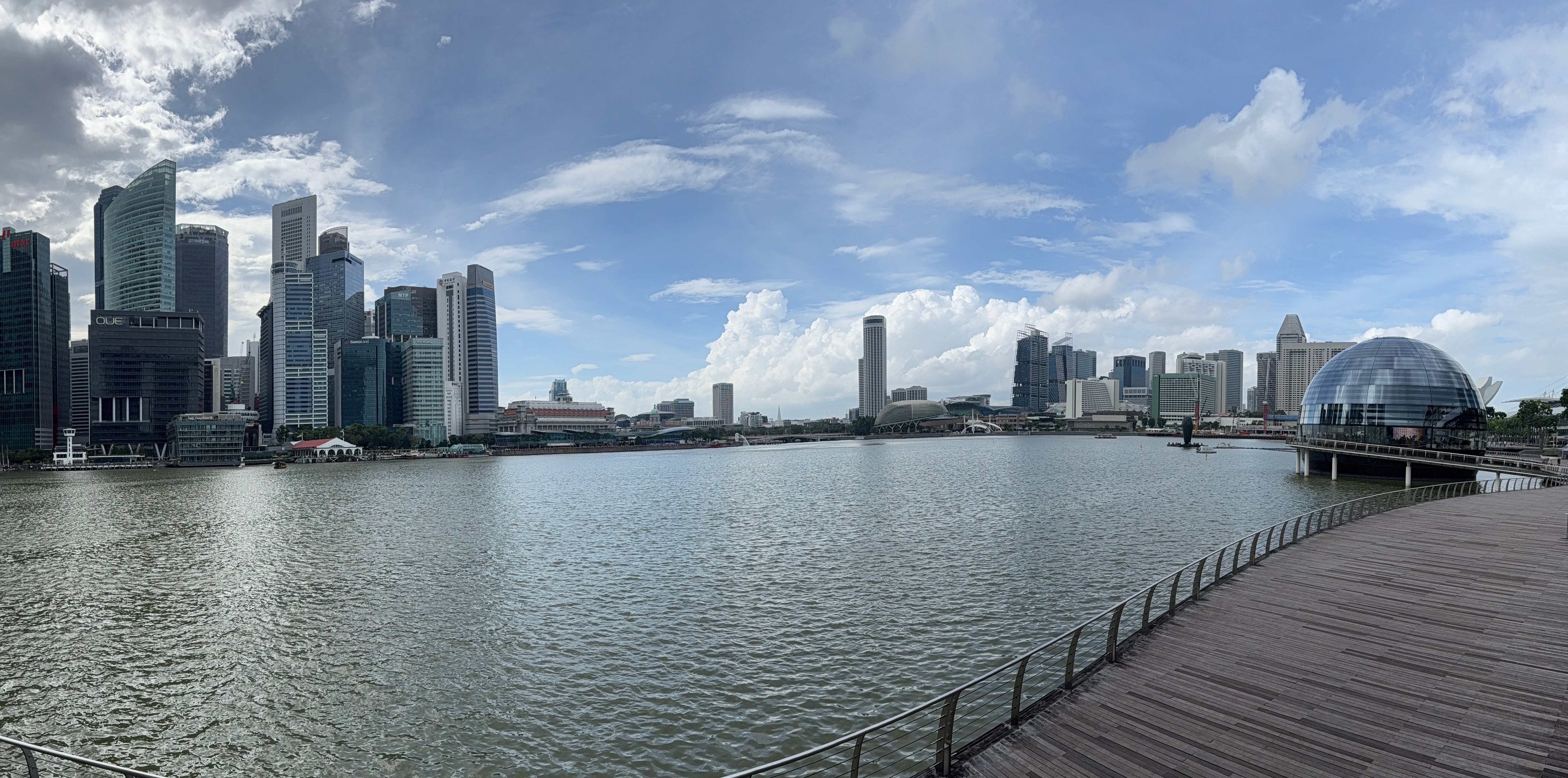
A few years ago, I read a product management book called Radical Product Thinking by Radhika Dutt, which opened with an analysis of Singapore as a “product” rather than a country. The thesis: all products should be designed with the end experience in mind - solving a problem and doing it delightfully. While this isn’t radical for product management, it’s radical for how a country and government operate.
Imagine a nation designed around the needs of its inhabitants - one where interactions with public transport, international airports, and government offices create a feeling of actual joy. Where citizens rave about their government like fans of a great app. That’s Singapore.
I spent four days there this week, and I can confirm: Singapore is, indeed, a delightful product.
Staying in Chinatown
My reference point for Chinatown was Seattle’s - not exactly a destination neighborhood - so Singapore’s Chinatown wowed me. It may have been my favorite part of the city. I stayed at the BEAT 1932 hostel1 and wandered constantly, which is my preferred way to experience any city.
My feet led me to the Buddha Tooth Relic Temple, a trip highlight. I was pulled in by a waft of sandalwood incense rising from a large metal cauldron filled with offerings from hundreds of visitors - a moment that lit up my PM brain. The customer is part of creating the welcoming atmosphere. I continued inside to see the gold Maitreya Buddha, and felt immediately transported back to my first Buddhist temple experiences in Thailand in 2011 - that rush of tranquility, safety, and awe. The “admission fee” was an optional offering: candles and flowers ranging $5–20. A beautifully effortless sliding scale model. Whatever you give, you’re contributing to the experience - another PM note taken.


Afterward, I wandered more - getting lunch AND dessert, a ritual I'm allowing myself more and more. The pistachio-honeycomb cake and black sesame oat milk latte from Rise Bakehouse was its own kind of religious experience (sans Buddha).


My Quest for Urban Nature
Needing some earthy energy, I found Fort Canning Park on Google Maps and went. Walking in gave me a relief similar to entering the temple - the pungent smell of green, wild roosters, ancient carvings, strangler trees, and endless flora species. I’m getting better at noticing what moves me and just following it.


Singapore also offers what we PMs call “surprise and delight” - several genuinely high-quality experiences with zero admission fee. The Gardens by the Bay is the best example: a stunning mesh of technology and nature with an amusement-park feel, located near the Marina Bay Sands. You can wander for free, and the signage weaves together Chinese, Japanese, Indian, and Malaysian cultural symbols across the gardens. I sprung the $14 for the Supertree Overlook skywalk and felt good about it - both the view and the contribution.


Singapore Wins in Innovation
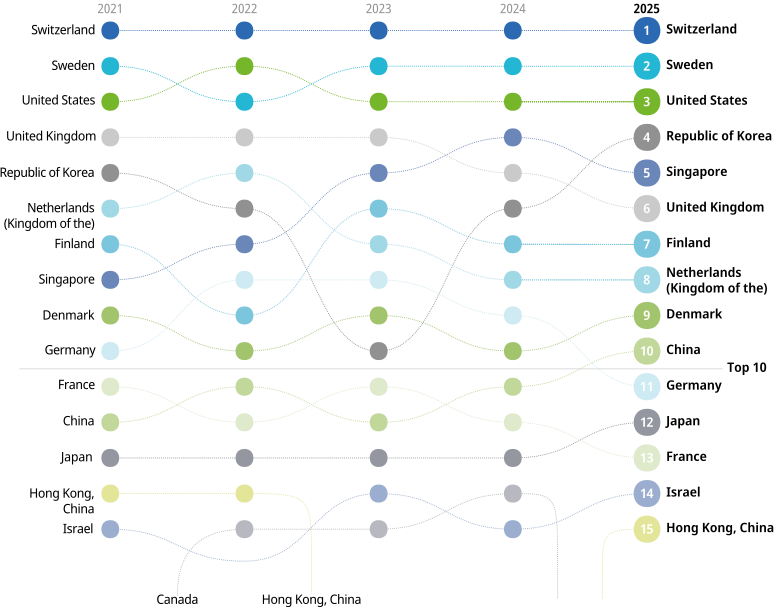
The WIPO (World Intellectual Property Organization) measures innovation across 78 factors - not just patents and test scores, but technology investment, adoption, and socioeconomic impact. Singapore currently ranks #5 globally and has had the fastest rate of improvement of any nation on the list. Switzerland, Sweden, and the US still hold the top spots, but Singapore is closing the gap. See the diagram below that shows Singapore’s growing rank.
What makes Singapore’s innovation story compelling is how they define it. They get that the people using the technology are as essential to innovation as the technology itself. Going back to the product lens: they understand that a great product isn’t just built - it’s experienced.
No, it’s not perfect…
I heard you can go to jail for dropping gum on the ground, yet I watched people flick cigarette butts and saw pick-pocket warning signs in Chinatown. Fine. No product is bug-free.
My real disappointment was the Marina Bay Sands Skypark. The hotel itself is an architectural marvel - a 340m “ship” mounted on top of three 57-story curved towers, with a genuine How the f%k is that possible? energy. But the $48 observation deck experience? Crushingly lame. Tourists packed into a tiny area, sitting on the ground eating dried-out samosas and sad pizza slices, blocking every view.
Hot tip from my friend Justin, who’s lived in Singapore for five years: as you follow the signs toward the Observation Deck, just before you head outside, look left for the entrance to Ce La Vie, a rooftop bar and restaurant. Same views, dramatically better experience. Reservations recommended.
This is a general travel rule I keep reconfirming - the “touristy” experiences on Viator and Expedia are almost always the least pleasant way to see a new place. Tourists, as a group, are jet-lagged and focused on getting their money’s worth, which often translates to rudeness. In Singapore especially, the real charm is the Singaporean people - and you miss that entirely when you’re moving in tourist herds.


What Will Become of Future Singapore?
I'm excited to watch the next 20 years of innovation coming out of Singapore. If any nation is going to raise the global bar on what responsible, human-centered innovation looks like, my money's on Singapore. And I'm fully planning to be around in 50 years to see if they've maintained their standing as a great product. (100 years might be pushing it — but maybe they'll have solved longevity by then, too.)
I regret staying at a hostel. I did it for the experience I never had, and I won’t do it again. This place was totally fine - clean, quiet - but I like to set up camp when I’m somewhere and I couldn’t do that in my “capsule,” which was the size of a twin bed.
I loved this view of Singapore! It's on my list of places to travel for sure.
Gorgeous travel notes. Love how much you are taking it all in. Hugs from across the world. Enjoy!